Consistency Goals in a Workout App
Consistency goals are the most common goal type — and the easiest to ruin with pressure mechanics. A good consistency goal doesn't force streaks. It supports rhythm: a baseline you can repeat, reviewed calmly over time.
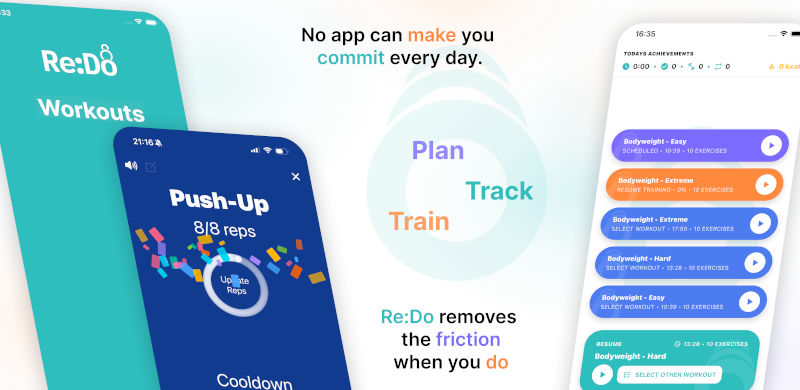
Plan your own training in Re:Do Workouts.
Create the workout in your own words, run it step by step with timers and notes, schedule it when it fits, and log what actually happened.
Use rolling windows (not all-or-nothing deadlines)
A rolling weekly goal adapts to real life. If a week is chaotic, you can still recover the rhythm in the next window. This is a better fit for people who want a no streak fitness app style tool.
- Example: “2–3 sessions per week”
- Example: “Active days per week”
- Review weekly; adjust monthly
Pair consistency goals with a default session
The fastest way to hit consistency goals is to remove decision friction. A default session keeps the baseline alive on low-energy days. Planning still matters, but the default session is what makes the goal sustainable.
How to use this page in Re:Do
Treat Consistency Goals in a Workout App as a focused setup guide, not a separate system to maintain. Use it when progress depends on seeing the pattern: define the target, keep sessions easy to log, and adjust only after the trend is visible.
The useful version is usually small at first: one workout, one schedule or timer rule if needed, and enough notes to make the next session obvious. After a few logged sessions, refine the plan clearly from what you actually did instead of guessing up front.
FAQ
Should I set consistency goals or exercise goals?
If you're rebuilding rhythm, start with consistency. Add exercise goals only after the baseline is stable.
What if I miss my goal?
Lower the baseline and keep moving. If the goal creates guilt or admin work, it is too big.