Exercise Goals in a Workout App
Exercise goals are movement-focused. Instead of chasing one big “fitness score”, you pick a movement you actually repeat and set a target that matches your current training phase.
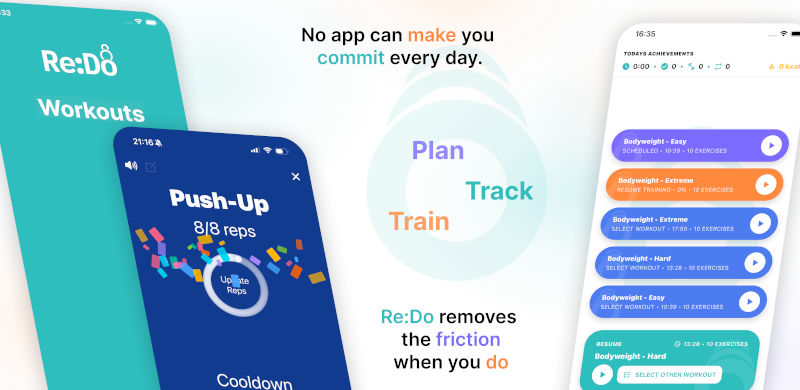
Plan your own training in Re:Do Workouts.
Create the workout in your own words, run it step by step with timers and notes, schedule it when it fits, and log what actually happened.
Two practical kinds of exercise goals
- Absolute targets: hit a reps or time number (e.g. “10 reps”, “60 seconds”)
- Relative improvement: increase your best result by a percentage over a rolling window
Targets vs actuals (the log stays honest)
A goal only works if your log records what happened. Re:Do treats the log as the source of truth: you can log set by set, and the record stays honest even when the plan changes under load.
Keep goals small
Exercise goals work best as a narrow constraint: one movement, one focus, one window. If you set ten exercise goals at once, you are usually building admin work rather than direction.
How to use this page in Re:Do
Treat Exercise Goals in a Workout App as a focused setup guide, not a separate system to maintain. Use it when progress depends on seeing the pattern: define the target, keep sessions easy to log, and adjust only after the trend is visible.
The useful version is usually small at first: one workout, one schedule or timer rule if needed, and enough notes to make the next session obvious. After a few logged sessions, refine the plan clearly from what you actually did instead of guessing up front.
FAQ
Should I track time or reps?
Track what matches the movement. Holds and intervals are usually time; strength sets are usually reps.
Do goals replace a program?
No. Goals shape attention; the workouts you repeat create the result. Keep planning simple and execution clean.