Training Balance Suggestions
Balance suggestions are the simplest kind of “optimization”: based on your recent history, what categories are missing? This is not a template program generator. It’s a prompt to notice gaps before they turn into months.
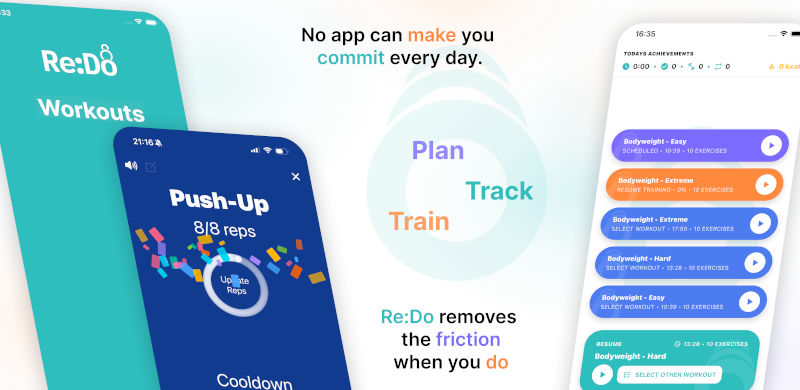
Plan your own training in Re:Do Workouts.
Create the workout in your own words, run it step by step with timers and notes, schedule it when it fits, and log what actually happened.
What “balance” actually means
- You repeat some categories a lot and unintentionally drop others
- You train hard on one side (push work) but forget the other (pull work)
- You plan well but the log shows a different reality
Why categories matter
Suggestions only work if they are grounded. If the app can’t infer what your session was, it can’t give useful feedback. In Re:Do, categories make the suggestions more honest: “missing category” is based on what you logged.
How to use balance suggestions without losing ownership
- Use suggestions as prompts, not commands
- Apply small changes (add one category session) instead of rewriting your whole plan
- Hide suggestions that don’t match your current phase
How to use this page in Re:Do
Treat Training Balance Suggestions as a focused setup guide, not a separate system to maintain. Use it when progress depends on seeing the pattern: define the target, keep sessions easy to log, and adjust only after the trend is visible.
The useful version is usually small at first: one workout, one schedule or timer rule if needed, and enough notes to make the next session obvious. After a few logged sessions, refine the plan clearly from what you actually did instead of guessing up front.
FAQ
Is this the same as AI coaching?
No. Balance suggestions can be simple logic based on categories and history. They should stay optional.
What if my training is intentionally unbalanced?
Then hide the suggestions for that phase. A tool should adapt to your choices, not fight them.