Workout Scheduling Guide
A good workout schedule app does one thing well: it makes your plan show up on the right day without re-entering workouts or rewriting notes. This guide groups the scheduling patterns Re:Do supports.
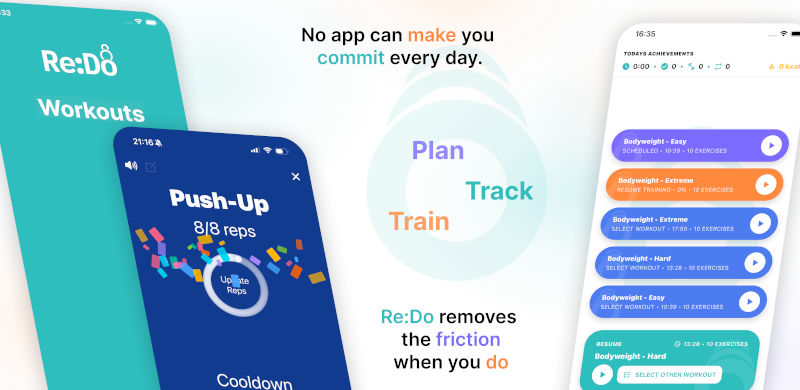
Plan your own training in Re:Do Workouts.
Create the workout in your own words, run it step by step with timers and notes, schedule it when it fits, and log what actually happened.
Scheduling is not the same as “motivation”. It is a planning convenience: you define the pattern once, then the calendar stays consistent while you focus on training.
How to choose the right schedule
- Fixed weekdays (Mon/Wed/Fri): use weekly scheduling
- Interval-based (every other day / every X days): use interval schedules
- Blocks (8-week plans): use time-bound start + end dates
Scheduling patterns (explained briefly)
There is no perfect schedule. The best pattern is the one that matches your constraints and keeps workouts repeatable. Here is a simple way to decide:
- Schedule once when you already know the date
- Daily when your plan is truly daily (mobility, rehab, or skill work)
- Weekly when training anchors to weekdays
- Monthly for longer patterns and reminders
- Every other day / every X days when your week is unpredictable
- A/B rotation when you want “next workout” logic rather than weekdays
- 8-week blocks for time-bound plans with a start and end
Irregular schedules and “train when you can”
If your calendar is chaotic, you are probably searching for a workout app for irregular schedule. In practice, that usually means one of two things:
- A workout when you want app flow (you decide the day-of, but keep workouts repeatable)
- An interval pattern (every other day / every X days) so the schedule adapts automatically
Some people explicitly want a no schedule workout app. That can work if you still keep a readable plan. Re:Do supports this style by keeping planning and execution lightweight. (See: Workout planning & routines.)
Flexible planning vs rigid calendars
A flexible workout planner app does not force your training into a single template. It lets you keep multiple workouts ready and then choose the right one based on the day. Scheduling is optional; consistency is the goal.
What to do when you miss a day
Missing a day is normal. The useful question is not “how do I stay perfect?” but “how do I continue without resetting everything?”. If you use a fixed weekday schedule, you can often just move the next session. If you use an interval schedule (every X days), the plan naturally shifts forward.
Scheduling, goals, and optimization (how they fit)
Scheduling is the calendar layer. Goals and optimization are feedback layers. They work best when they do not fight each other: schedule a pattern you can actually keep, then review your log and adjust what is missing.
The best schedule is usually the one you can repeat for months with minimal overhead.
- Goals: Workout goals are optional and user-defined
- Optimization: Training optimization suggestions can help you notice drift
- Tracking: Workout tracking keeps the record honest
Start here
Recurring patterns
- Daily workout schedule
- Weekly workout schedule
- Monthly workout schedule
- Mon/Wed/Fri schedule
- Every other day schedule
- Every X days schedule
- A/B workout rotation schedule
- 8-week workout plan schedule
FAQ
Do I need to schedule every workout?
No. Many people keep a library of repeatable sessions and schedule only when it helps their week.
Is A/B rotation better than weekdays?
It depends. A/B is useful when “next workout” matters more than “which weekday is it”.
What if I want planning without a strict calendar?
Start with routines, then schedule only the parts you want. See: Workout planning.